Palaces and Pavilions of Istanbul
11 hand-picked places in İstanbul, with photos, notes and a map.

GeziBilen · Digital Guide
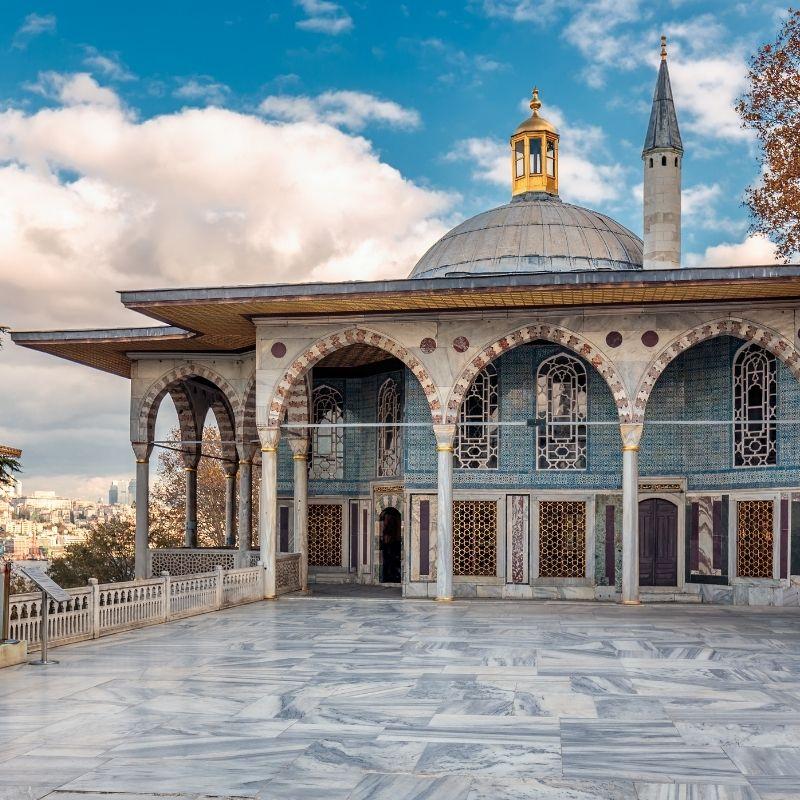
For those who want to see the rich historical and cultural texture of Istanbul dating back to the past, palaces and pavilions that attract attention with their architectural features are waiting for you.
1. Topkapi Palace


Topkapi Palace, one of the symbols of Istanbul, hosted the Ottoman Dynasty for 500 years. Completed in 1478, the palace was built by Fatih Sultan Mehmet and opened as a museum in 1924.
2. Dolmabahce Palace


Located on the shores of the Bosphorus, Dolmabahçe Palace was built between 1843 and 1856 during the reign of Mahmud II. The palace, where Atatürk spent his last days, became a historical memory in 1938.
3. Beylerbeyi Palace


Beylerbeyi Palace under the Bosphorus Bridge was built by Sultan Abdulaziz between 1861 and 1865. The palace was used to host foreign heads of state during the Ottoman period.
4. Yildiz Chalet Mansion


Yıldız Şale Mansion in Yıldız Park in Beşiktaş was built by Abdülhamit II in the 19th century. The mansion consists of three main sections and hosted foreign guests such as the British and French.
5. Kucuksu Pavilion


Küçüksu Pavilion in Üsküdar was built by the Balyan Family in the 19th century by Sultan Abdülmecit. The pavilion on the shores of the Bosphorus was built in the baroque architectural style and has a museum-palace concept.
6. Linden Pavilion


Located between Nişantaşı and Beşiktaş, Ihlamur Pavilion was built by Sultan Abdülmecit in the 19th century. The pavilion was built in the Baroque style and is open to visitors for a fee.
7. Sultan's Mansion


Located in Eminönü, the Hünkar Pavilion draws attention with its 17th century İznik tiles and woodwork. Part of the New Mosque Complex, the pavilion can be visited during the second week of every month.
8. Khedive Palace


Built in Beykoz in 1907 by the Egyptian Khedive Abbas Hilmi Pasha, the Khedive Pavilion combines Ottoman and Egyptian architectural elements. The pavilion is used for social events.
9. Beykoz Mecidiye Pavilion


Built between 1845 and 1854, the Beykoz Mecidiye Pavilion is an important example of Ottoman palace architecture. Built by the Governor of Egypt, Mehmed Ali Pasha, the pavilion is famous for its symmetrical plan and marble decorations.
10. Aynalıkavak Pavilion


Aynalıkavak Pavilion, located on the shores of the Golden Horn in Istanbul, was used as a shipyard garden in the 1450s. Built during the reign of Ahmed III, the structure currently serves as a museum.
11. Tophane Pavilion


Built in Beyoğlu in 1852 by Abdülmecid I, Tophane Pavilion was used for military and diplomatic visits. Today, it houses Mimar Sinan University.